All Categories
Featured
Table of Contents
The ILAW International Lawyers Assisting Workers library focuses on worldwide labor law. It includes countless cases, reports and short articles, and news covering major legal developments around the world.
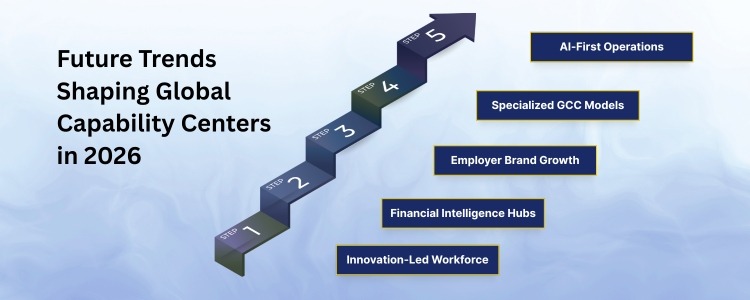
Scaling AI and ML Expertise Within Your GCCThe U.S. Department of Labor (DOL) administers and implements more than 180 federal laws. These mandates and the guidelines that implement them cover numerous workplace activities for about 165 million employees and 11 million work environments. Following is a brief description of a number of DOL's primary statutes most typically suitable to businesses, task seekers, employees, retirees, professionals and beneficiaries.
For reliable details and referrals to fuller descriptions on these laws, you should seek advice from the statutes and guidelines themselves. It needs employers to pay covered workers who are not otherwise exempt at least the federal minimum wage and overtime pay of one-and-one-half-times the routine rate of pay.
For farming operations, it restricts the employment of kids under age 16 throughout school hours and in certain tasks deemed too dangerous. The Wage and Hour Department also enforces the labor standards provisions of the Immigration and Nationality Act that use to aliens authorized to operate in the U.S. under specific nonimmigrant visa programs (H-1B, H-1B1, H-1C, H2A).
Future-Proofing GCC Expansion in 2026
Security and health conditions in the majority of personal industries are managed by OSHA or OSHA-approved state programs, which also cover public sector employers. Companies covered by the OSH Act should adhere to OSHA's regulations and safety and health requirements. Employers also have a general duty under the OSH Act to offer their workers with work and a work environment devoid of acknowledged, major dangers.
Compliance assistance and other cooperative programs are also available. If you worked for a you ought to get in touch with the for the state in which you lived or worked. The U.S. Department of Labor's Office of Workers' Settlement Programs does not have a function in the administration or oversight of state employees' payment programs.
Scaling AI and ML Expertise Within Your GCCThe Energy Personnel Occupational Disease Compensation Program Act is a payment program that supplies a lump-sum payment of $150,000 and prospective medical benefits to workers (or certain of their survivors) of the Department of Energy and its professionals and subcontractors as an outcome of cancer brought on by direct exposure to radiation, or specific diseases triggered by direct exposure to beryllium or silica incurred in the performance of duty, as well as for payment of a lump-sum of $50,000 and prospective medical advantages to individuals (or certain of their survivors) identified by the Department of Justice to be qualified for compensation as uranium workers under section 5 of the Radiation Direct Exposure Settlement Act.
8101 et seq., develops a detailed and special employees' payment program which pays compensation for the impairment or death of a federal worker arising from injury sustained while in the efficiency of duty. FECA, administered by OWCP, provides advantages for wage loss compensation for total or partial disability, schedule awards for irreversible loss or loss of use of specified members of the body, related medical costs, and trade rehab.
The statute also supplies monthly benefits to a departed miner's survivors if the miner's death was because of black lung disease. The Staff Member Retirement Income Security Act (ERISA) manages employers who provide pension or welfare advantage strategies for their workers. Title I of ERISA is administered by the Staff Member Advantage Security Administration (EBSA) and enforces a wide variety of fiduciary, disclosure and reporting requirements on fiduciaries of pension and welfare advantage strategies and on others having dealings with these strategies.
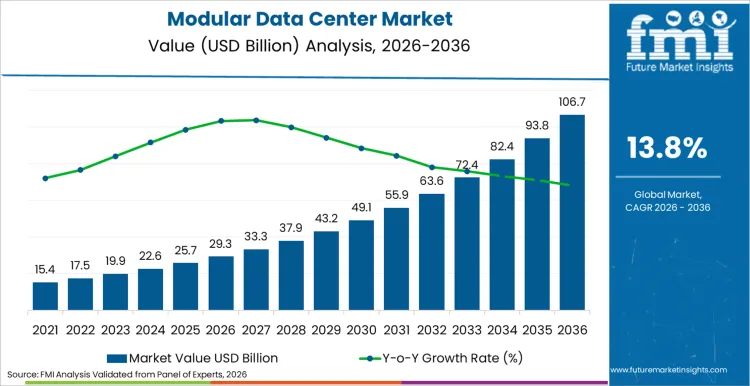
International Employment Law Compliance: 2026 Changes
Under Title IV, specific employers and plan administrators should fund an insurance coverage system to secure specific type of retirement benefits, with premiums paid to the federal government's Pension Benefit Warranty Corporation. EBSA also administers reporting requirements for continuation of health-care arrangements, required under the Comprehensive Omnibus Spending Plan Reconciliation Act of 1985 (COBRA) and the health care mobility requirements on group plans under the Medical Insurance Portability and Responsibility Act (HIPAA).
It safeguards union funds and promotes union democracy by needing labor organizations to submit annual financial reports, by requiring union officials, companies, and labor specialists to submit reports concerning specific labor relations practices, and by developing requirements for the election of union officers. The act is administered by the Office of Labor-Management Standards.
Particular persons who serve in the armed forces have a right to reemployment with the employer they were with when they went into service. This consists of those called up from the reserves or National Guard.

Latest Posts
Understanding Workforce Dynamics in the Modern Era
Managing Legal Risks in Global Labor Hubs
Navigating Global Labor Regulations for Global Expansion